How to Find a Reliable Trucking Company in the US
Finding the right trucking company can make or break your supply chain. Whether you are a small business shipping goods across state lines or a manufacturer moving freight every week, the carrier you choose affects your delivery times, your costs, and your reputation with your own customers. With thousands of carriers operating across the country, picking the right one takes more than a quick Google search.
This guide breaks down exactly what to check before you book a load, what separates a reliable carrier from a risky one, and how to compare offers without getting burned by hidden fees or missed pickups.
What Makes a Trucking Company “Reliable”
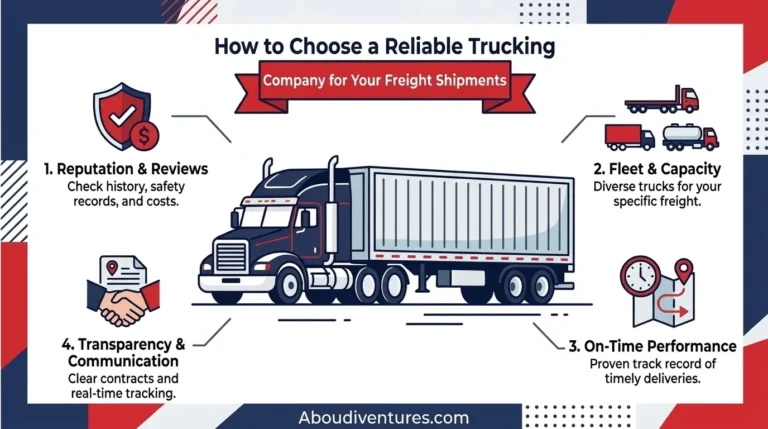
Reliability in freight comes down to five things: proper licensing, a clean safety record, adequate insurance, the right equipment for your freight, and consistent communication. A carrier can be missing one of these and still look fine on paper, which is why shippers need to check each one individually instead of trusting a sales pitch.
Step 1: Confirm the Carrier Is Properly Licensed
Every legitimate trucking company operating in the US must be registered with the Federal Motor Carrier Safety Administration.
- MC Number. This is the Motor Carrier number issued by the FMCSA. It confirms the company is authorized to transport goods across state lines.
- USDOT Number. This number tracks the carrier’s safety record, inspections, and compliance history.
You can look up any carrier’s MC and USDOT number for free through the FMCSA Safety and Fitness Electronic Records system. A company that cannot provide both numbers, or hesitates when you ask, is not one you should trust with your freight.
Step 2: Check the Safety Rating
Once you have the USDOT number, pull up the carrier’s safety rating in the same FMCSA database. Ratings fall into three categories: satisfactory, conditional, or unsatisfactory. A satisfactory rating means the carrier meets federal safety standards. Avoid any company with an unsatisfactory rating or a long pattern of violations.
Step 3: Ask About Insurance Coverage
A reliable trucking company carries enough insurance to cover your freight if something goes wrong. Ask for proof of cargo insurance and general liability coverage before you ship anything valuable. A carrier with nothing to hide will hand this over without pushback.
Step 4: Match the Carrier’s Equipment to Your Freight
Not every trucking company can handle every type of load, and this is where a lot of shippers pick the wrong partner. The equipment has to match the freight, not the other way around.
If you are moving a full trailer’s worth of goods, you want a full truckload carrier that dedicates one trailer to your shipment with no stops in between. If your load is smaller, a less than truckload setup lets you pay only for the space you use.
For freight that does not fit inside an enclosed trailer, steel, machinery, construction materials, or anything oversized, you need a carrier that runs flatbed equipment. Our own flatbed trucking guide covers exactly what shippers should know before booking one.
If your shipment is boxed or palletized general freight, it is almost certainly moving in what the industry calls a dry van. We wrote a full breakdown of what a dry van is and how dry van shipping works if you want to understand the most common trailer type on the road.
Temperature sensitive freight, produce, pharmaceuticals, frozen goods, needs a reefer carrier with continuous temperature monitoring. Confirming equipment type upfront avoids delays and rejected loads at pickup.
Step 5: Review Track Record and Client Feedback
Look beyond the company’s own website. Check third party review platforms, ask for references from current clients, and find out how long the company has actually been hauling freight. A carrier with steady, positive feedback over time is a safer bet than one with no history or a pattern of complaints.
It is also worth remembering that the people driving these trucks matter as much as the company behind them. Carriers that invest in properly trained, CDL licensed drivers tend to run tighter operations with fewer safety incidents, since driver quality is one of the biggest factors behind a carrier’s safety rating.
Step 6: Evaluate Communication and Tracking
Freight visibility matters. Ask potential carriers how they handle updates, whether they offer real time load tracking, and how fast they respond when something changes. A trucking company that communicates proactively will save you time and stress, especially on long haul or time sensitive shipments.
Step 7: Compare Pricing the Right Way
The cheapest quote is not always the best deal. Unusually low rates are often a sign of a carrier cutting corners on maintenance, driver pay, or compliance, all of which can lead to delays or damaged freight. Instead of chasing the lowest number, compare quotes on total value: licensing, insurance coverage, equipment quality, and communication.
Red Flags to Watch For
- No MC or USDOT number available on request
- Reluctance to share proof of insurance
- No verifiable reviews or business history
- Unusually low quotes with no clear explanation
- Slow or unclear communication during the quoting process
Why Licensing Should Come Before Price
Shippers often shop on price first, but licensing and safety compliance should always come before cost. A fully licensed and bonded carrier protects you from liability issues, ensures your freight is handled by trained professionals, and gives you a paper trail if something goes wrong. This single check is often what separates a serious trucking company from a risky one.
Final Thoughts
Finding a reliable trucking company in the US comes down to doing your homework before you ship. Confirm licensing through the MC and USDOT numbers, check the safety rating, verify insurance, match the equipment to your freight, and look at real feedback from past clients. A carrier that checks all these boxes will protect your freight, keep your business running smoothly, and become a long term partner you can count on.
Aboudi Ventures LLC is a licensed and bonded carrier, MC #1757911, USDOT #4458409, running dry van, flatbed, and refrigerated freight across all 49 states. If you want a quote or want to check our full range of services, visit our freight shipping services page or get in touch through our contact page.