
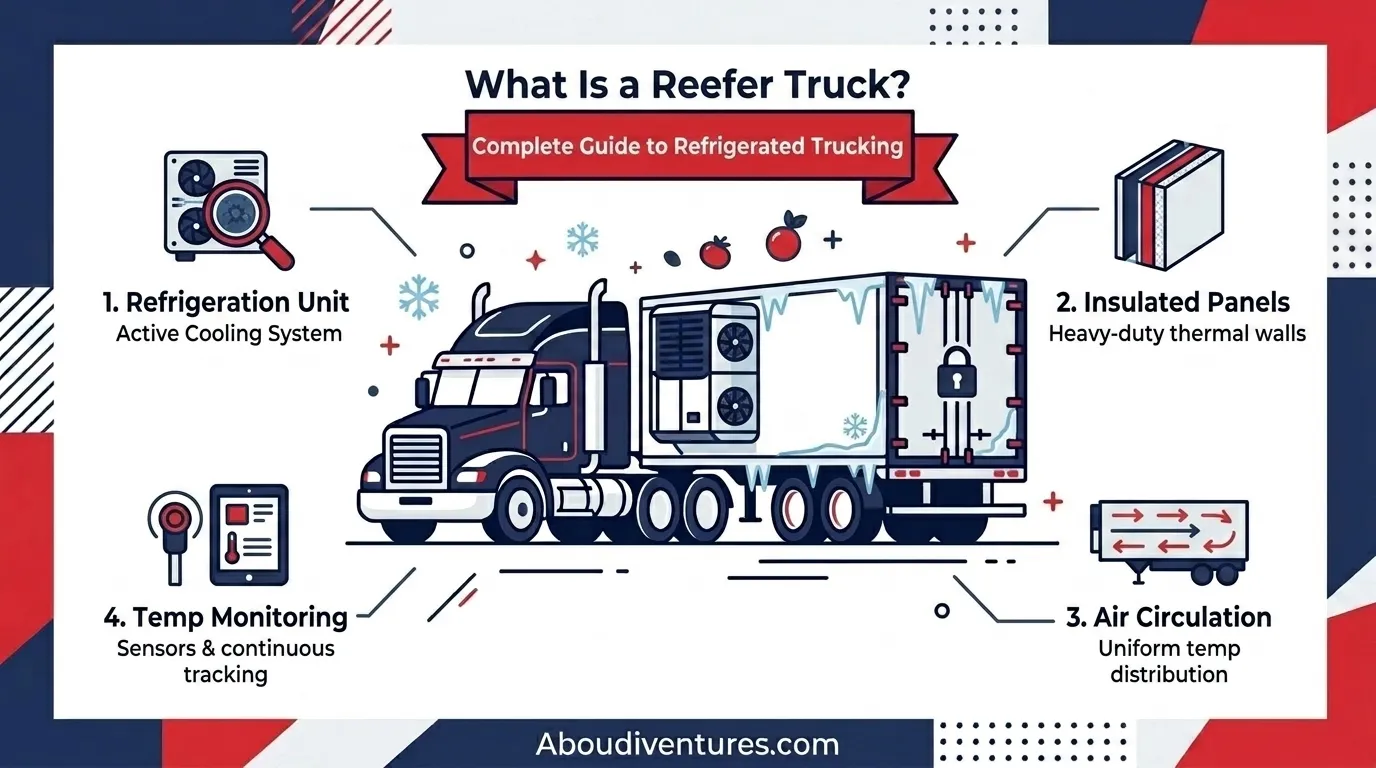
What Is a Reefer Truck? Complete Guide to Refrigerated Trucking
If you have ever wondered what is a reefer truck, the short answer is this: a reefer truck is a semi truck pulling a refrigerated trailer, built to carry cargo that has to stay within a specific temperature range from pickup to delivery. The word “reefer” is trucking slang for refrigerated, and it covers everything from fresh produce and dairy to frozen goods and temperature sensitive pharmaceuticals.
Unlike a standard dry van, which simply protects freight from weather and road debris, a reefer trailer actively controls the internal temperature the entire time it is on the road. That single difference is what makes reefer trucking one of the most in demand and highest paying segments of the freight industry.
In this guide, we will break down exactly how a reefer truck works, what it can and cannot haul, how it compares to other trailer types, and what shippers should know before booking a refrigerated load.
What Does Reefer Mean in Trucking?
“Reefer” is industry shorthand for “refrigerated.” The term dates back to the early days of refrigerated shipping, when cargo was stored in cooled warehouses before making its way onto trucks and rail cars. Today, the word applies to the trailer itself, the refrigeration unit mounted on it, and the entire process of hauling temperature controlled freight.
A reefer truck is not a special type of engine or cab. The tractor pulling the trailer is a standard semi truck. What makes it a reefer truck is the trailer behind it, an insulated box fitted with a self powered cooling system that keeps the cargo area at a set temperature regardless of what is happening outside.
How Does a Reefer Truck Work?
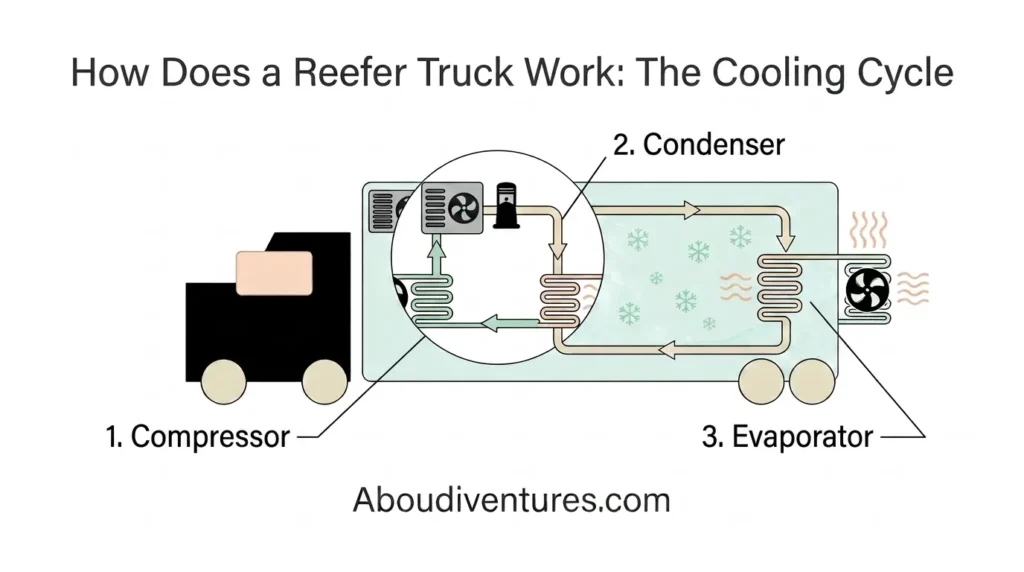
Every reefer trailer relies on a transport refrigeration unit, or TRU, mounted at the front of the trailer. The TRU runs independently of the truck’s main engine, usually powered by its own small diesel motor or, increasingly, an electric system. This means the refrigeration keeps running even when the truck is parked, idling, or waiting at a loading dock.
The cooling process happens in three main stages:
- Compressor – Pulls in refrigerant gas and compresses it, turning it into a hot, high pressure liquid.
- Condenser – Releases the heat from that liquid as it passes through coils, similar to how a car radiator works.
- Evaporator – Allows the cooled refrigerant to expand back into a gas, absorbing heat from inside the trailer and dropping the internal temperature.
Air chutes and floor channels then circulate that cold air evenly throughout the trailer, so cargo at the back stays just as cold as cargo near the doors. Most reefer units carry their own fuel tank, separate from the truck, holding roughly 50 gallons, which typically lasts four to five days depending on the set temperature and how often the doors open.
What Temperature Range Can a Reefer Truck Maintain?
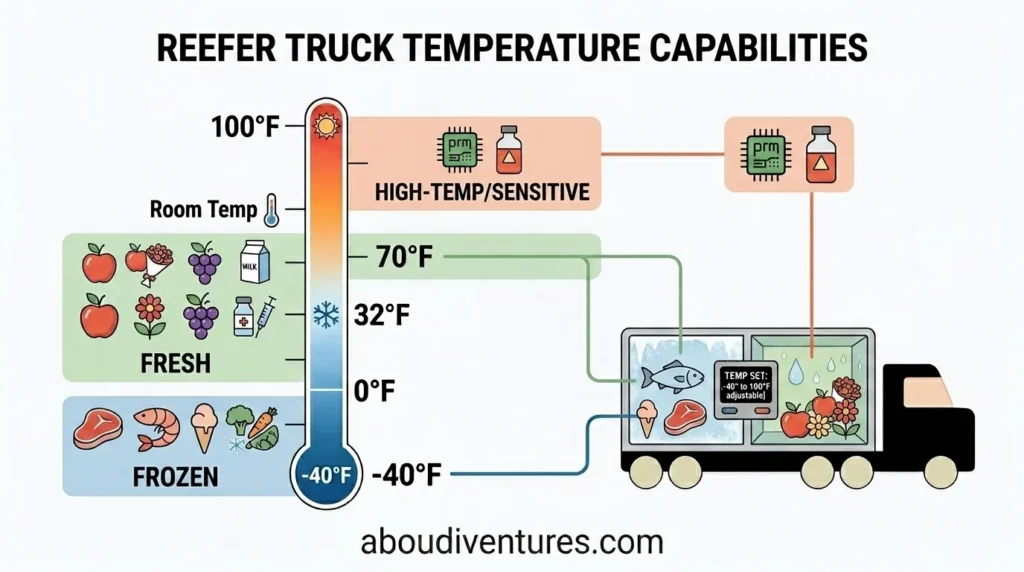
One of the biggest advantages of reefer trucking is flexibility. A well maintained reefer unit can hold temperatures anywhere from about minus 40 degrees Fahrenheit up to over 100 degrees Fahrenheit, which means the same trailer can haul frozen goods on one run and heat sensitive freight on the next. This range is why reefer trucks are trusted with:
- Fresh produce and flowers
- Meat, poultry, and seafood
- Dairy products
- Frozen foods
- Pharmaceuticals and vaccines
- Certain chemicals and electronics that are sensitive to humidity or temperature swings
In colder months, reefer units can also work in reverse, acting as a heater to keep freight from freezing during transit.
Reefer Truck vs Dry Van: What’s the Difference?
Shippers new to freight often ask whether they need a reefer or a dry van. The difference comes down to one question: does the cargo need active temperature control?
A dry van is a fully enclosed trailer with no cooling system. It protects freight from rain, wind, and road dust, and it is the right choice for anything shelf stable, boxed, or palletized that does not spoil in normal temperatures.
A reefer trailer does everything a dry van does, plus it actively maintains a set temperature, which makes it the only option for perishable or climate sensitive freight. Reefer loads generally cost more to ship than dry van freight because of the added fuel, equipment, and monitoring involved, but for temperature sensitive cargo, there is no substitute.
If your freight does not fit inside an enclosed trailer at all, such as oversized machinery or construction materials, that is a different category entirely. Our flatbed trucking guide covers how that side of freight works.
Why Reefer Trucking Matters for the Supply Chain
Reefer trucks are the backbone of what the industry calls cold chain logistics, the unbroken chain of temperature control that keeps perishable goods safe from farm or factory all the way to the shelf. Any break in that chain, even a short one, can spoil an entire load and create a food safety risk. That is why regulations like the FDA’s Food Safety Modernization Act exist, setting standards for how temperature sensitive food must be handled during transport.
For pharmaceutical and medical shipments, the stakes are even higher. Vaccines and certain medications must stay within a narrow temperature window, and reefer carriers with proper monitoring and pre cooling procedures are essential to getting those shipments where they need to go without spoilage.
Things Shippers Should Ask Before Booking a Reefer Load
Before booking refrigerated freight, it helps to confirm a few details with your carrier:
- Can the trailer be pre cooled to the required temperature before loading begins
- Does the carrier provide continuous temperature monitoring throughout transit
- Is the driver experienced with reefer specific loading practices, such as proper airflow around pallets
- Is the load covered by cargo insurance appropriate for perishable freight
A carrier that can answer all of these clearly is one you can trust with time sensitive, high value freight.
How Aboudi Ventures Handles Refrigerated Freight
At Aboudi Ventures, our Refrigerated Transport service is built around exactly the concerns above. Our reefer trailers hold precise temperatures from pickup to delivery, we offer pre cooled trailers on request, and every load includes continuous temperature monitoring so nothing slips outside its safe range. Whether you are shipping fresh produce, frozen goods, or pharma grade freight, our team follows FSMA aligned handling practices from start to finish across all 49 states we serve.
If you have a temperature sensitive load that needs to move, request an instant quote and our dispatch team will walk you through timing, equipment, and pricing before your freight ever leaves the dock.